No alerts today.

Curriculum

Computer Science

At St Mary’s, our computing curriculum is intended to equip all children for their future, not just as learners but as they move forward in their lives.

Computer Science Intent

Technology touches all aspects of our children’s lives. Whether they are learning or playing, connecting or creating, our children’s experiences of technology are different and wider-reaching than any generation before them. Our computing curriculum equips them with the skills, knowledge and understanding they need to make the most of technology, learning how to use it to enhance their lives and connect safely with others.
Children will need to showcase their learning behaviours and understanding of technology in order to adapt to these changes. The computing curriculum intends to develop and nurture these behaviours and provide children with a variety of problem solving strategies to draw upon in the future. The curriculum is rooted in our core Christian values and is designed to support children in becoming individuals who can communicate and collaborate effectively and creatively using technology to enable this. The moral basis of our curriculum prepares children to become positive role models and open minded citizens who are able to take their place in an ever-changing society.

Computer Science Implementation

When computing is taught discretely, it should be done over the course of a day. A ‘computing day’ should focus on one area of computing and develop children’s skills over the course of the day.

During computing sessions, the whole class are taught at the same time. This allows children to work collaboratively to solve problems and create content. This also supports children who are less confident and allows children who are more confident to develop their skills further.

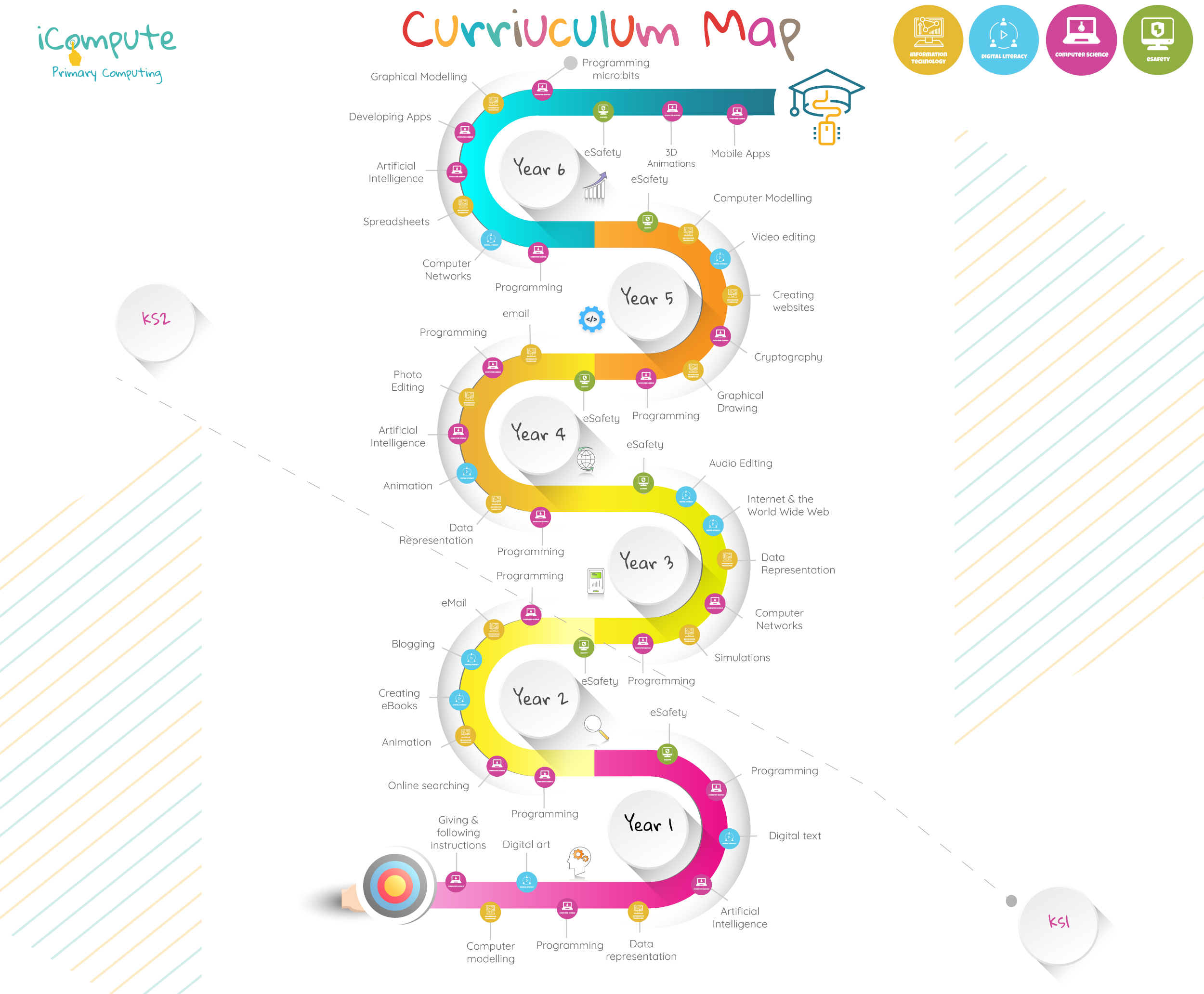
We follow the iCompute scheme for computing across the school. The scheme is comprehensive and forward-thinking, following a progressively planned sequence of units covering topics such as:

  • The concept and use of algorithms, coding and programming
  • Using technology to model real or imaginary environments and situations
  • Drawing and creating graphical art work
  • How AI works, its uses, limitations and risks. 
  • Word processing, presenting and sharing written work 
  • Collecting, storing and representing data using digital tools

Online-Safety is taught every half term in our PSHE lessons and is reviewed and revised at the start of computing days – depending on the focus of the learning.  The school uses iCompute online safety plans and resources for delivering this important area of the curriculum.  This programme meets the needs of the RSHE requirements and our computing curriculum requirements.

Useful Links

  • Computing National Curriculum Ladder
  • Computing Pathway